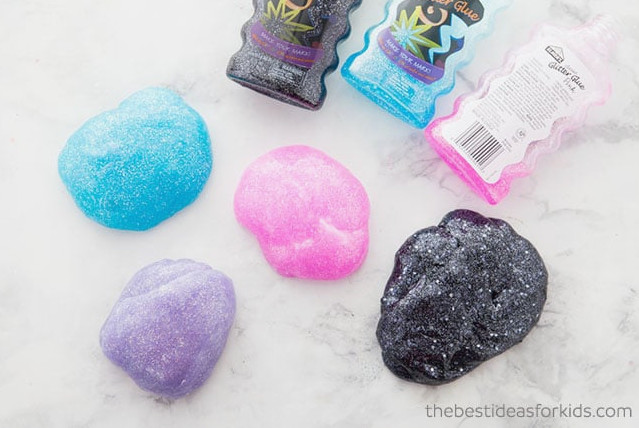
There are several activators you can use to transform a glue mixture into contact solution slime. Contact lens solution is our top choice. Saline solution is another option, provided that the label lists boric acid and sodium borate among the ingredients.
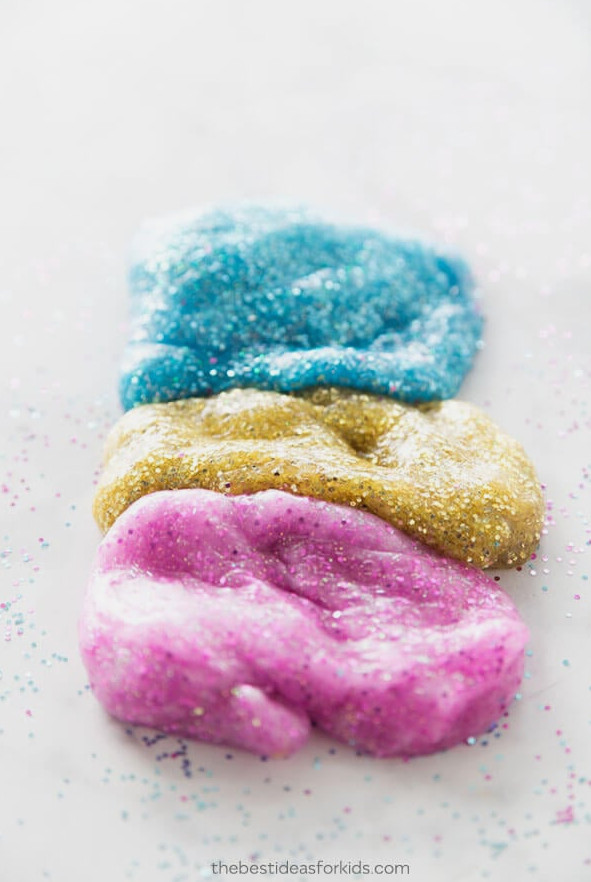
Supplies Needed
This easy three-ingredient slime recipe is a favorite for good reason!
Only 3 ingredients are required:
- 1 Bottle of Elmer’s Glue (6 oz) – for a more economical option, we like buying the gallon size and measuring the amount needed – if you use a larger bottle, measure 3/4 cup of glue. For slime that looks like the examples shown here, choose Elmer’s glitter glue and try our Unicorn slime recipe.
We recommend Elmers since it is a dependable, high-quality glue that has been tested. Substituting other ingredients may prevent the slime from forming properly.
- Baking Soda – 1/2 teaspoon
- 1½ TBSP of Contact Lens Solution – Renu Fresh contains boric acid and sodium borate. Do not substitute a different brand. Always check the product label first to make sure these ingredients are included.
- 1/4 cup of water (optional)- Water is not required, but it can give the slime a stretchier texture. For that reason, we suggest adding up to 1/4 cup.
Watch the Video Tutorial
Steps for Making Slime With Contact Solution
1. Select a bowl large enough to mix all of the slime ingredients.
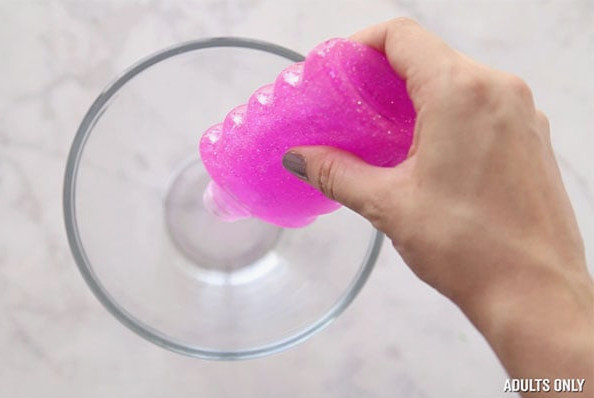
2. Pour the entire 6 oz bottle of Elmer’s Glitter glue into the bowl (or measure 3/4 cup of glue if you are using a larger bottle).
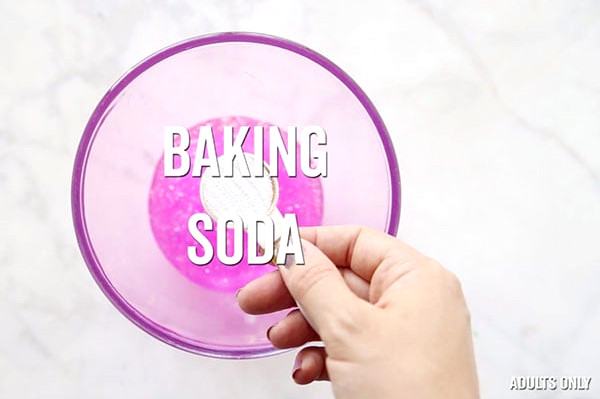
3. Add 1/2 teaspoon of baking soda and mix thoroughly.
To make the slime more elastic, mix in up to 1/4 cup of water.
5. Slowly add the contact lens solution
Reminder: the contact lens solution needs to contain boric acid, or the slime will not come together.
Add the solution in small amounts while stirring continuously. This gives you better control and helps prevent using too much.
We generally start with 1 tablespoon, mix it in completely, and then add the rest little by little.
Knead and work the mixture well before adding more solution, since too much activator can leave the slime stiff.
The full amount may not be necessary, so add it slowly and watch the texture.
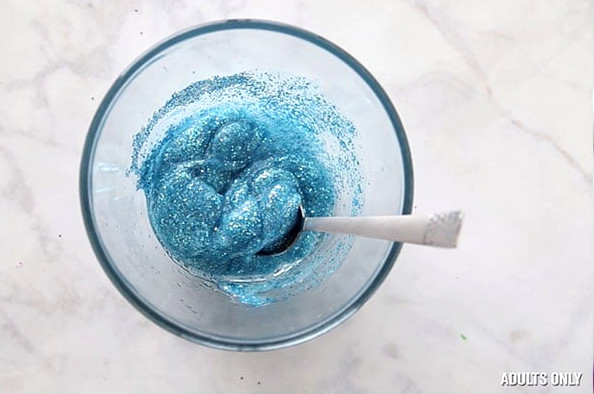
6. Keep stirring until the slime begins to thicken and pull together.
Take the mixture out of the bowl and knead it again and again. It may take more kneading than expected before the slime reaches the right consistency. It will probably feel very sticky at first, especially when water has been added. Keep stretching and folding it until the stickiness fades.
If the consistency still needs adjusting, continue kneading. Add contact solution sparingly, using just one teaspoon at a time, to avoid making the slime too hard.
If it is still especially sticky, rub a little lotion or baby oil onto your hands before continuing.

Why does boric acid matter for slime?
Boric acid is obtained from borax, while liquid starch contains sodium tetraborate, another compound derived from borax. Most slime activators contain some form of a borax-based ingredient. We prefer contact lens solution because it is convenient, widely available, and simple to use (liquid starch is not available for purchase in Canada,while Borax is not readily available in the UK).
We recommend this Renu Fresh Contact Lens Solution because its ingredients include both boric acid and sodium borate.
Get the full recipe below:
- Select a bowl large enough to mix all the slime ingredients.
- Pour the entire 6 oz bottle of Elmer’s Glitter glue into the bowl.
- Add the baking soda and stir until thoroughly mixed. For a stretchier consistency, you can mix in up to 1/4 cup of water at this point.
- Slowly add the contact lens solution, making sure it contains boric acid so the slime can form. Pour in a little at a time while stirring to prevent using too much. You may not need the entire amount, so take your time.
- Keep mixing until the slime begins to come together and thicken. Take it out of the bowl and knead it repeatedly. It can take more kneading than expected before the slime reaches the right consistency. If it still feels off, continue working it. For slime that remains too sticky, rub a little lotion or baby oil onto your hands.
Slime Safety & Precautions
Important: Making slime is a hands-on science experiment, and it requires appropriate safety precautions. By preparing this slime, you agree to our site terms, which you can read here.
- Adults should handle all chemicals and materials
- Adults should be responsible for making the slime
- Carefully read and follow the directions provided for every product. If contact lens solution is accidentally swallowed, seek medical help immediately.
- This project is not appropriate for children under 4 years old.
- Never place slime in your mouth. Always wash your hands before and after handling it.
- Discontinue use at once if skin irritation develops. People with sensitive skin should wear gloves when making or playing with the slime.
- Slime is a science activity best made and enjoyed in moderation. Children should always be supervised, and extended play sessions should be avoided.
We hope this easy contact solution slime recipe helped you get started!
Discover more slime recipes we love:
Additional Slime Recipes
Head to ourUnicorn Slimepage to see how you can turn this recipe into Unicorn Slime!
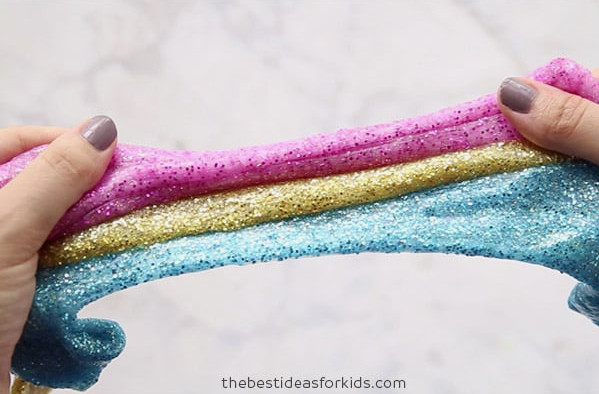
For a different feel, make Fluffy Slime. Its distinctive texture makes it particularly fun to play with! See our Fluffy Slime Recipe.
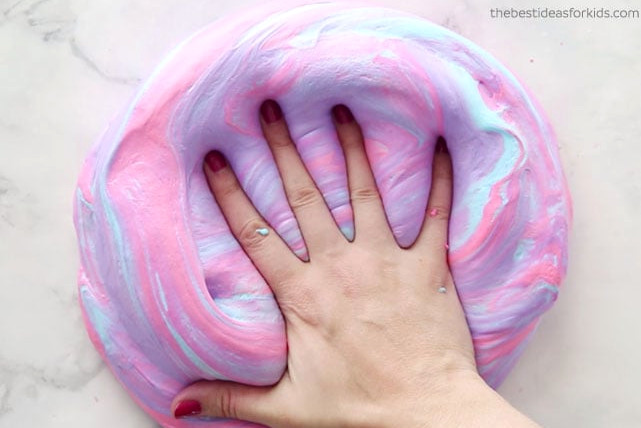
Learn how we combined these 4 slimes to create Galaxy Slime! Mixing this colorful version together is especially entertaining!